
THE ROLE OF EDGES: WHERE MATERIALS MEET
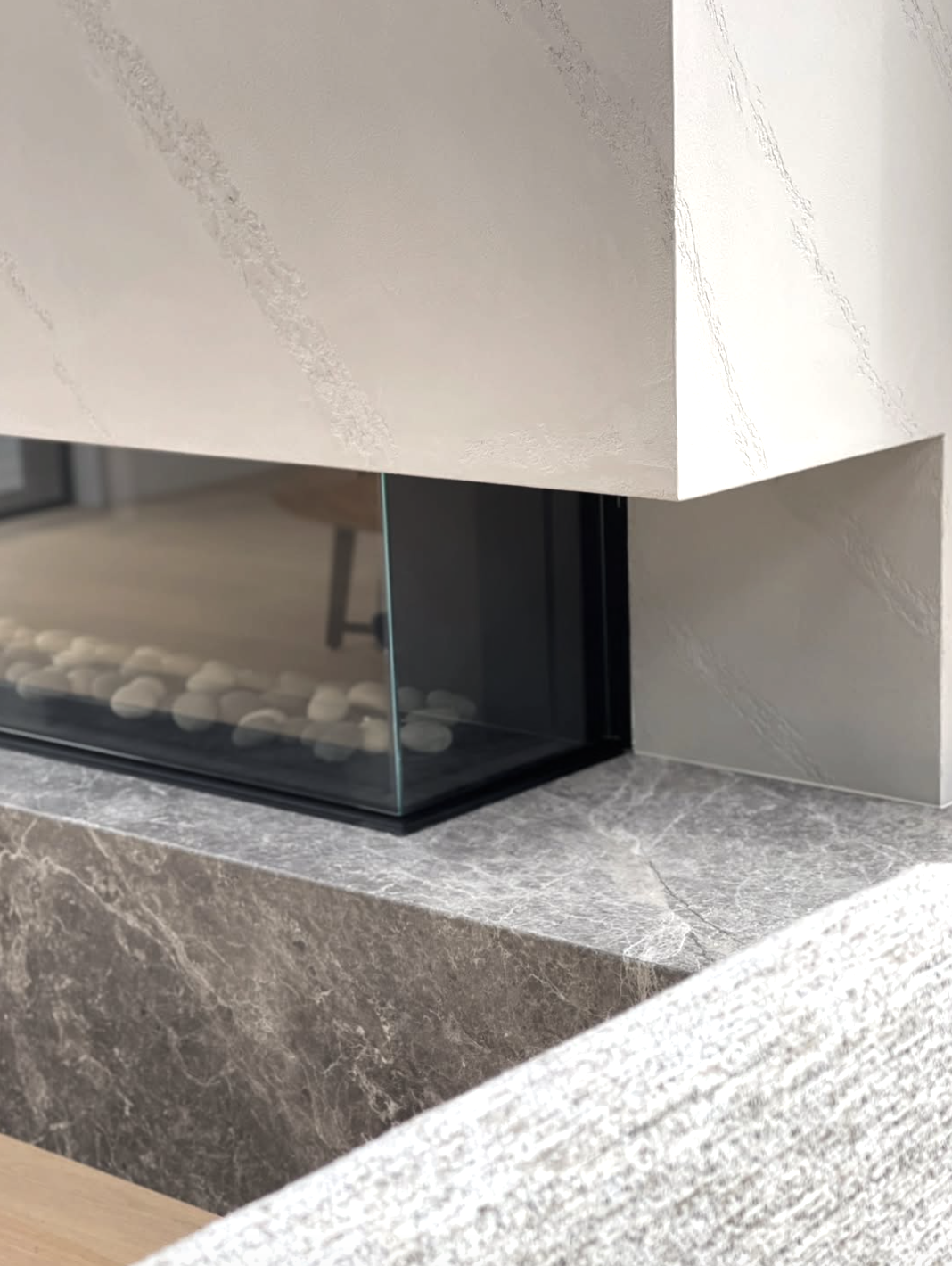
Where One Thing Ends, Another Begins
Every interior is made up of transitions.
Timber to tile. Stone to plaster. Joinery to wall.
These junctions are rarely the focal point, yet they carry disproportionate visual weight. When resolved well, they feel seamless. When they’re not, they subtly disrupt the entire space.
Precision Creates Calm
There’s a clarity that comes from clean, intentional edges.
A perfectly aligned junction. A consistent shadow line. A material that finishes exactly where it should.
These details remove visual noise. They allow the eye to move effortlessly through a space without interruption, which is often what people interpret as “calm” or “considered” design.
It’s not about making everything sharp or minimal; it’s about making everything make sense.
The Power of the Shadow Line
One of the most understated tools in interior design is the shadow line. Rather than forcing two materials to meet directly, a small recess is introduced between them. This creates a subtle line of shadow that defines each surface without the need for trims or visual breaks.
It’s a detail often associated with more architectural interiors, but its impact is simple:
It makes materials feel intentional rather than accidental.
When Edges Compete
In less resolved spaces, edges tend to accumulate. Different trims meeting at awkward points, materials stopping inconsistently or finishes changing without a clear reason.
Individually, these decisions might seem minor. Together, they create tension, a sense that the space hasn’t quite been thought through. This is often why a room can feel “busy” even when the styling is minimal.
Soft vs Defined Transitions
Some of the most refined interiors balance defined junctions with softer transitions:
a rounded corner against a crisp wall
a textured plaster meeting smooth stone
a fabric edge softening a hard surface
It’s this contrast that creates depth. Too many hard edges can feel rigid; too many soft ones can feel unresolved. The balance is what gives a space nuance.
Why It Matters in Staging
In home staging, edges become even more important. You’re often working with existing materials, which means you can’t always change the architecture, but you can control how it’s read. By aligning furniture with architectural lines, simplifying visual breaks, and avoiding unnecessary layering at junctions, a space immediately feels more intentional.
The Detail That Defines the Whole
Edges aren’t designed to stand out. They’re designed to disappear or at least feel effortless. But they’re also what quietly hold everything together. Because in the end, great design isn’t just about the elements within a space, it’s about how those elements meet.