
COMMON INTERIOR DESIGN MISTAKES (And What to Do Instead)
A space can look “put together” and still feel slightly off.
It’s often not one obvious issue, but a collection of small decisions that don’t quite align. The scale feels wrong, the layout feels unsettled, or the room lacks the sense of calm you were aiming for. At Sojo, we see this often. The good news is, most design mistakes aren’t about having the wrong pieces, but about how those pieces are considered and brought together.
1. Choosing Furniture That’s Too Small
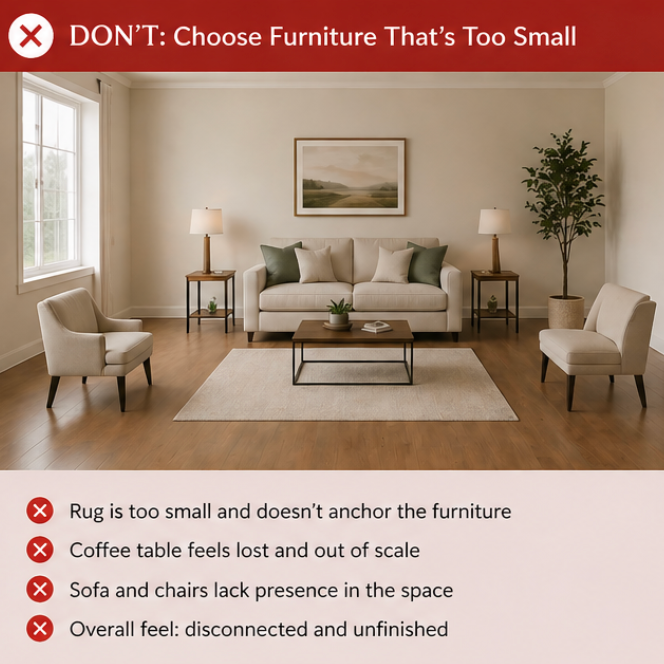
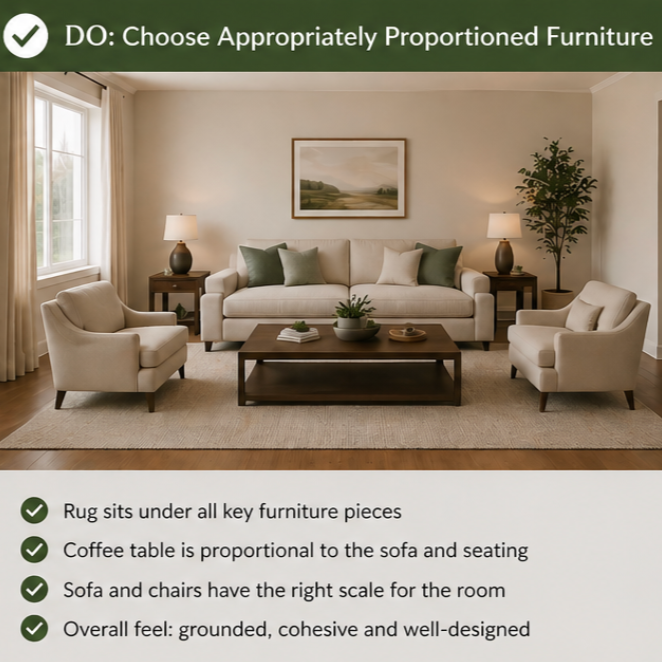
Undersized furniture is one of the quickest ways to make a space feel disconnected.
A rug that doesn’t sit under the furniture, a coffee table that feels lost in the middle of the room, or a sofa that doesn’t anchor the space properly can all make a room feel unfinished.
What to do instead:
Think in terms of proportion, not just fit. Rugs should sit comfortably beneath key furniture pieces, sofas should feel substantial within the room, and coffee tables should relate in scale to surrounding seating. Slightly larger pieces almost always create a more grounded, considered feel.
2. Pushing Everything Against the Walls
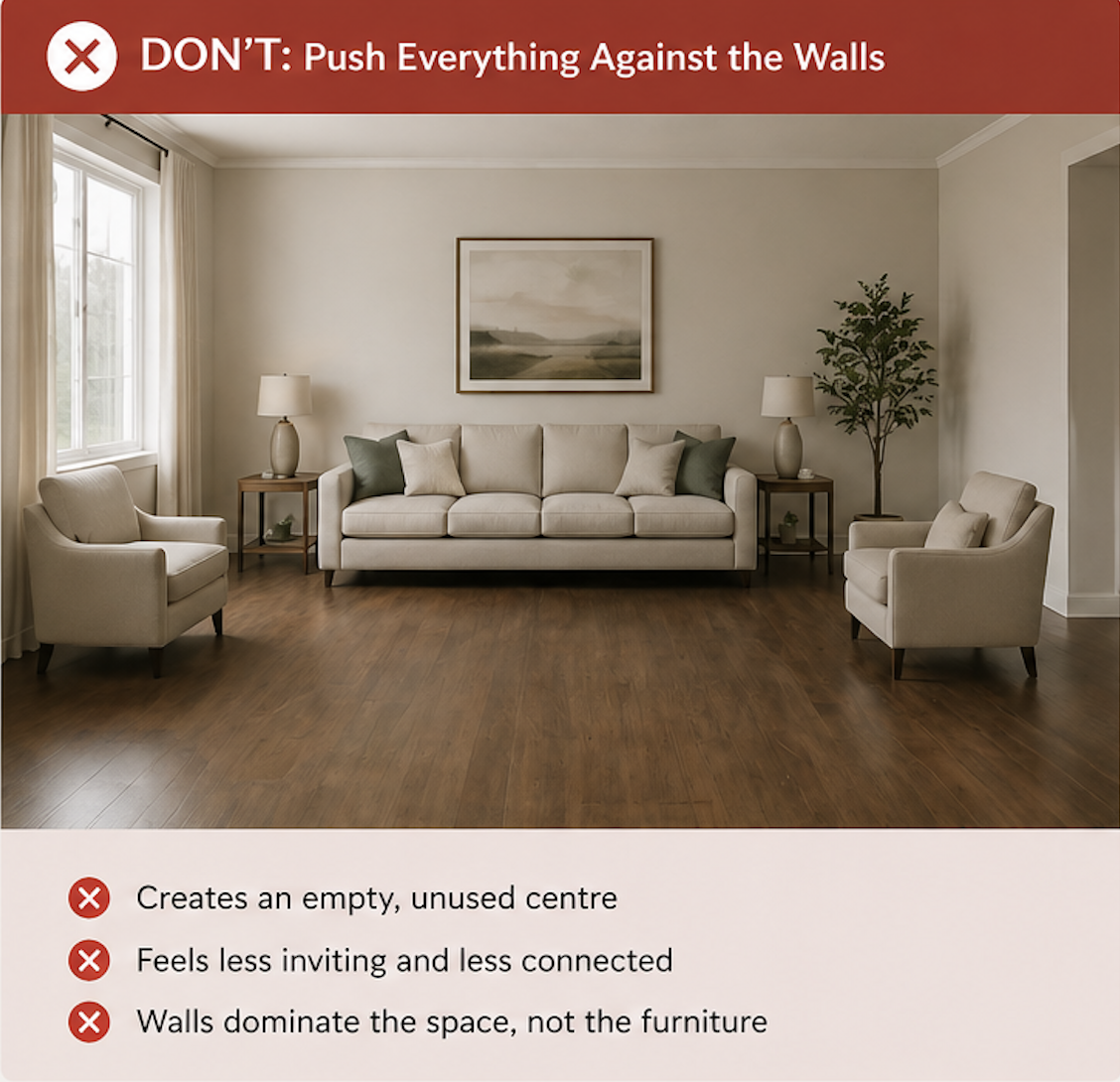
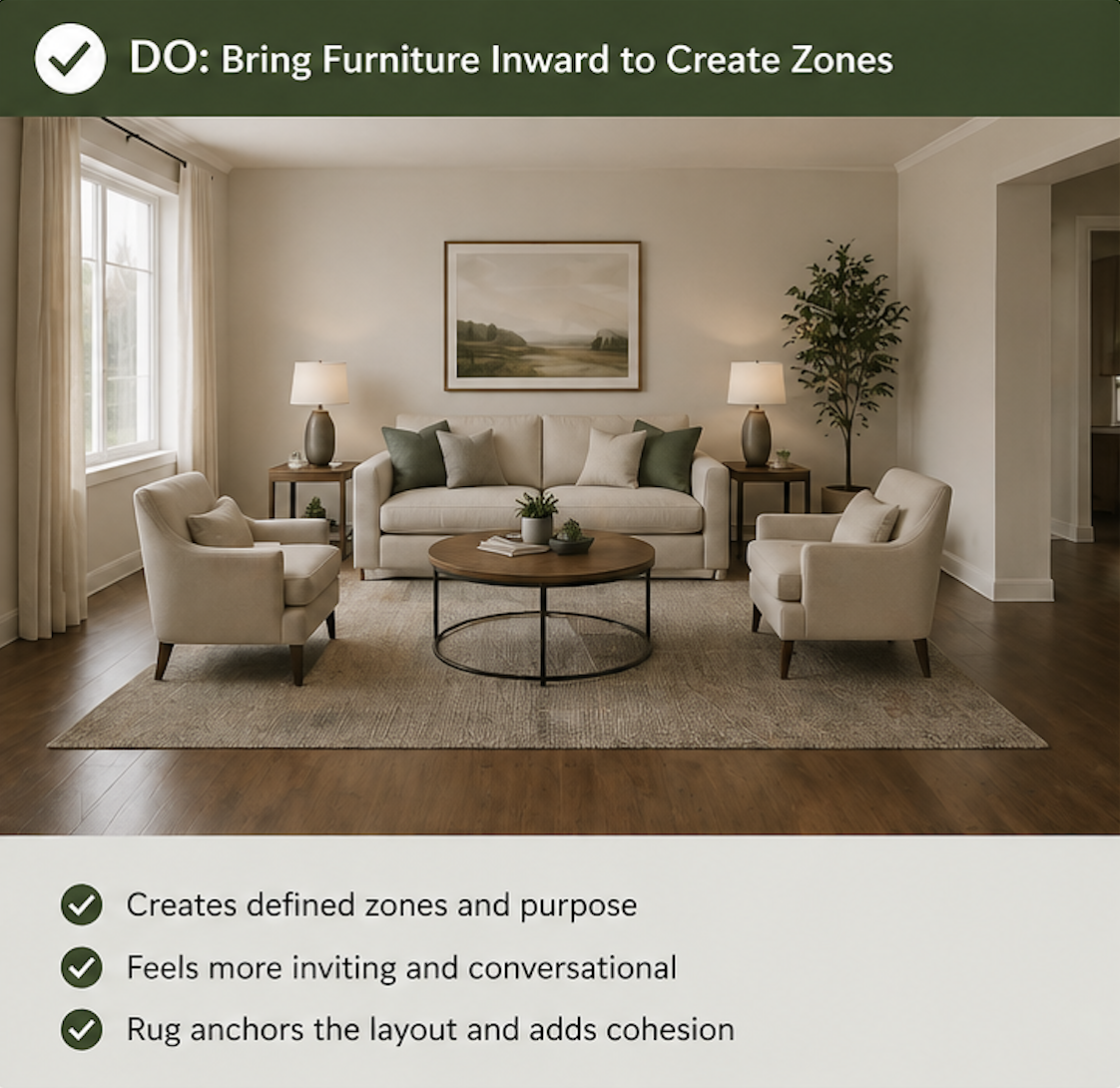
It’s a common instinct, especially in smaller spaces, to push furniture outwards to “create more room.” In reality, this often has the opposite effect, leaving the centre feeling empty and the layout disconnected.
What to do instead:
Bring furniture inwards to create zones. Even a slight shift can make a space feel more intentional and conversational. A well-placed rug can help define this and visually anchor the layout.
3. Overstyling Surfaces
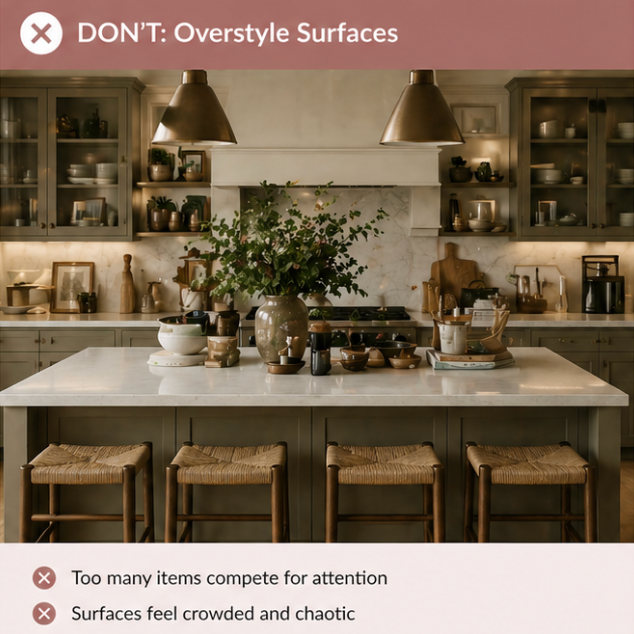
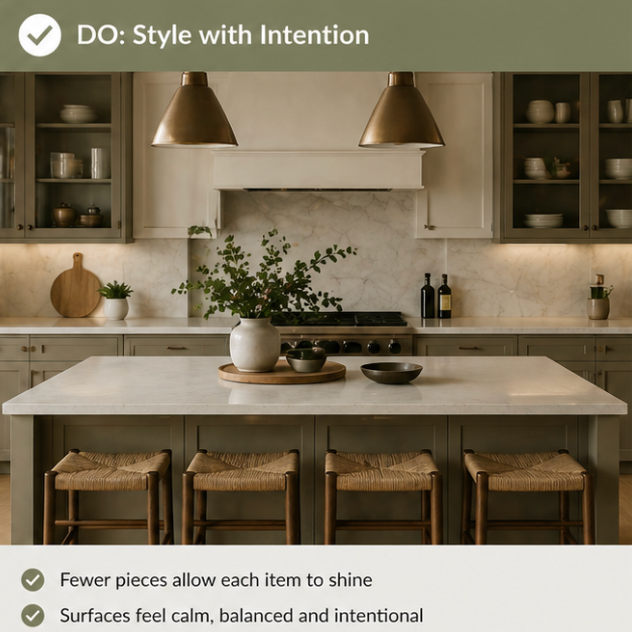
When every surface is filled, nothing stands out. Too many decorative objects can create visual noise, making a space feel cluttered rather than considered.
What to do instead:
Choose fewer, more intentional pieces and give them space to breathe. A simple, well-composed vignette will always feel more elevated than an overcrowded one.
4. Ignoring Lighting Layers
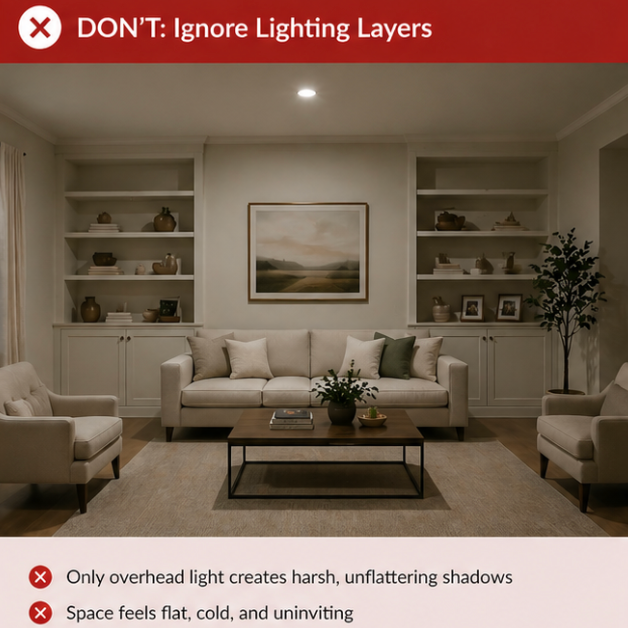
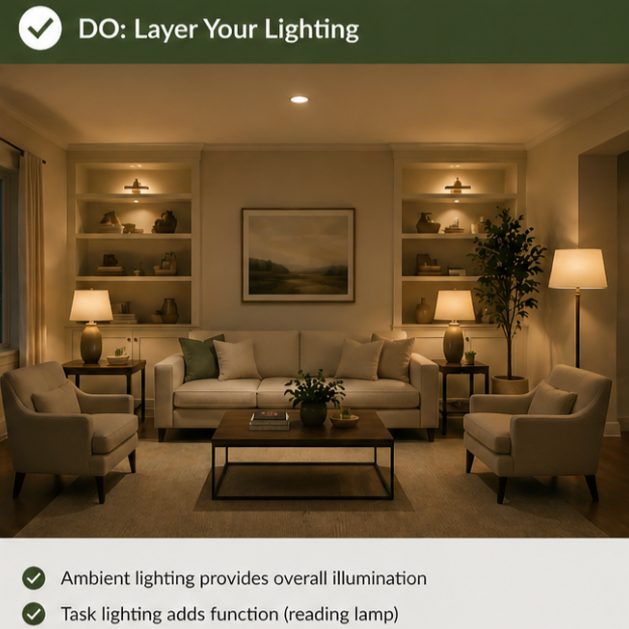
Relying solely on overhead lighting can leave a space feeling flat and uninviting. Lighting plays a huge role in how a room feels, not just how it looks.
What to do instead:
Layer your lighting. Combine ambient (overhead), task (reading lamps), and accent lighting (table or floor lamps) to create warmth and depth. Soft, diffused lighting instantly makes a space feel more relaxed and refined.
5. Matching Everything Too Perfectly
When everything matches furniture sets, colours, and finishes, a space can feel flat and overly staged. It lacks the depth and individuality that make a home feel lived-in and considered.
What to do instead:
Mix materials and tones within a cohesive palette. Pair different textures, introduce subtle contrast, and allow for variation. The goal is harmony, not uniformity.
6. Hanging Artwork Too High
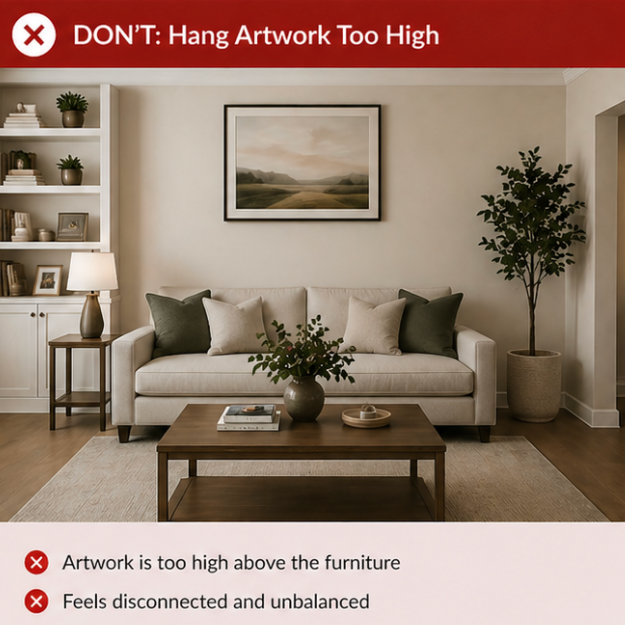
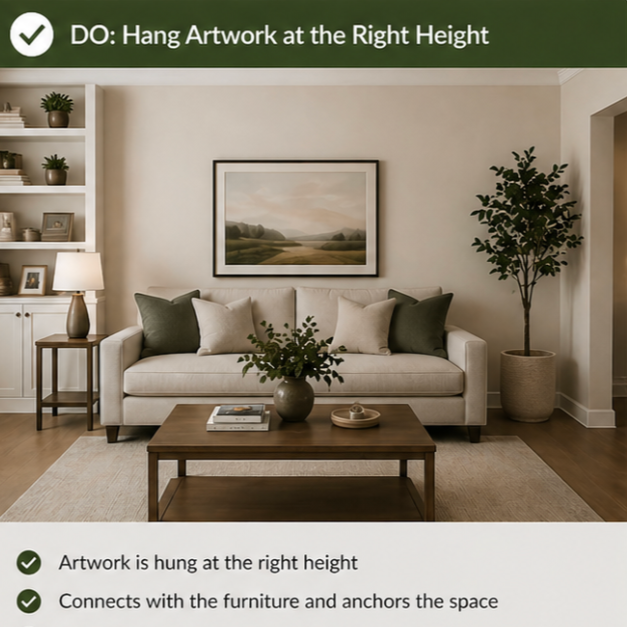
Artwork placed too high is surprisingly common and can throw off the entire visual balance of a room. It disconnects the piece from the furniture below it.
What to do instead:
Lower artwork so it relates to the space around it. As a general guide, the centre of the piece should sit around eye level, or slightly above the furniture it’s paired with.
7. Neglecting Negative Space
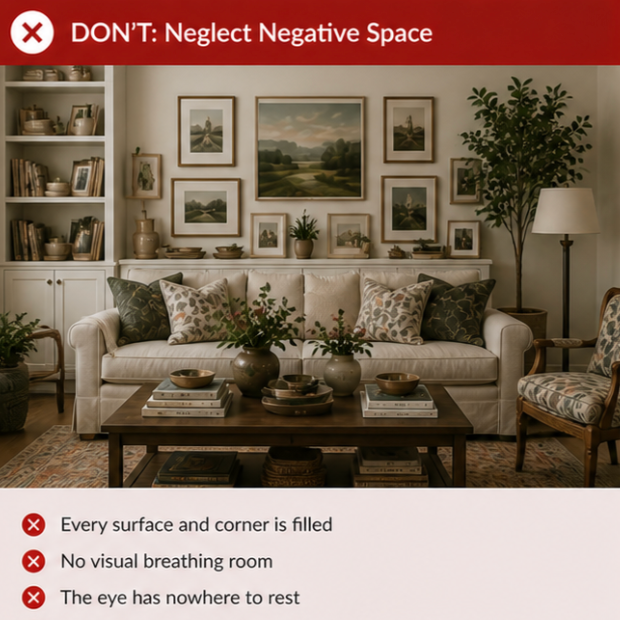
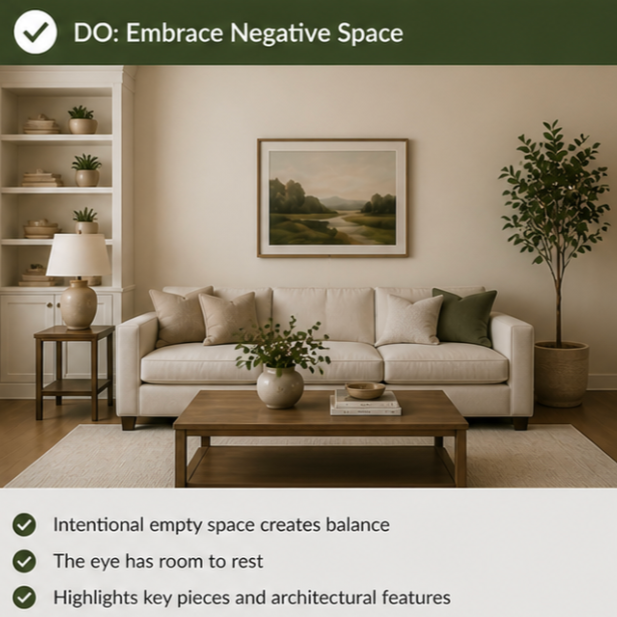
Trying to fill every corner can make a space feel overwhelming. Without areas for the eye to rest, even beautiful interiors can feel busy.
What to do instead:
Embrace restraint. Leave some areas intentionally empty. Negative space adds clarity, highlights key pieces, and creates a sense of calm that’s difficult to achieve otherwise.
The Difference Is in the Details
Most design mistakes aren’t dramatic, they’re subtle. But so are the solutions.
A shift in scale, a more considered layout, or a moment of restraint can completely change how a space feels. It’s these small, thoughtful decisions that turn a room from something that simply looks good into something that feels complete.