
FORMAT TILES & SPLASHBACKS: WHERE FUNCTION MEETS QUIET DESIGN
In contemporary interiors, splashbacks are no longer just a practical necessity; they’ve become a key design moment. When paired with thoughtfully chosen format tiles, they can bring cohesion, scale, and subtle sophistication to a space.
Large-format tiles allow splashbacks to feel less like an add-on and more like a natural extension of the architecture. With minimal grout lines, surfaces read cleaner and more expansive, helping kitchens and bathrooms feel calm, considered, and effortlessly modern.
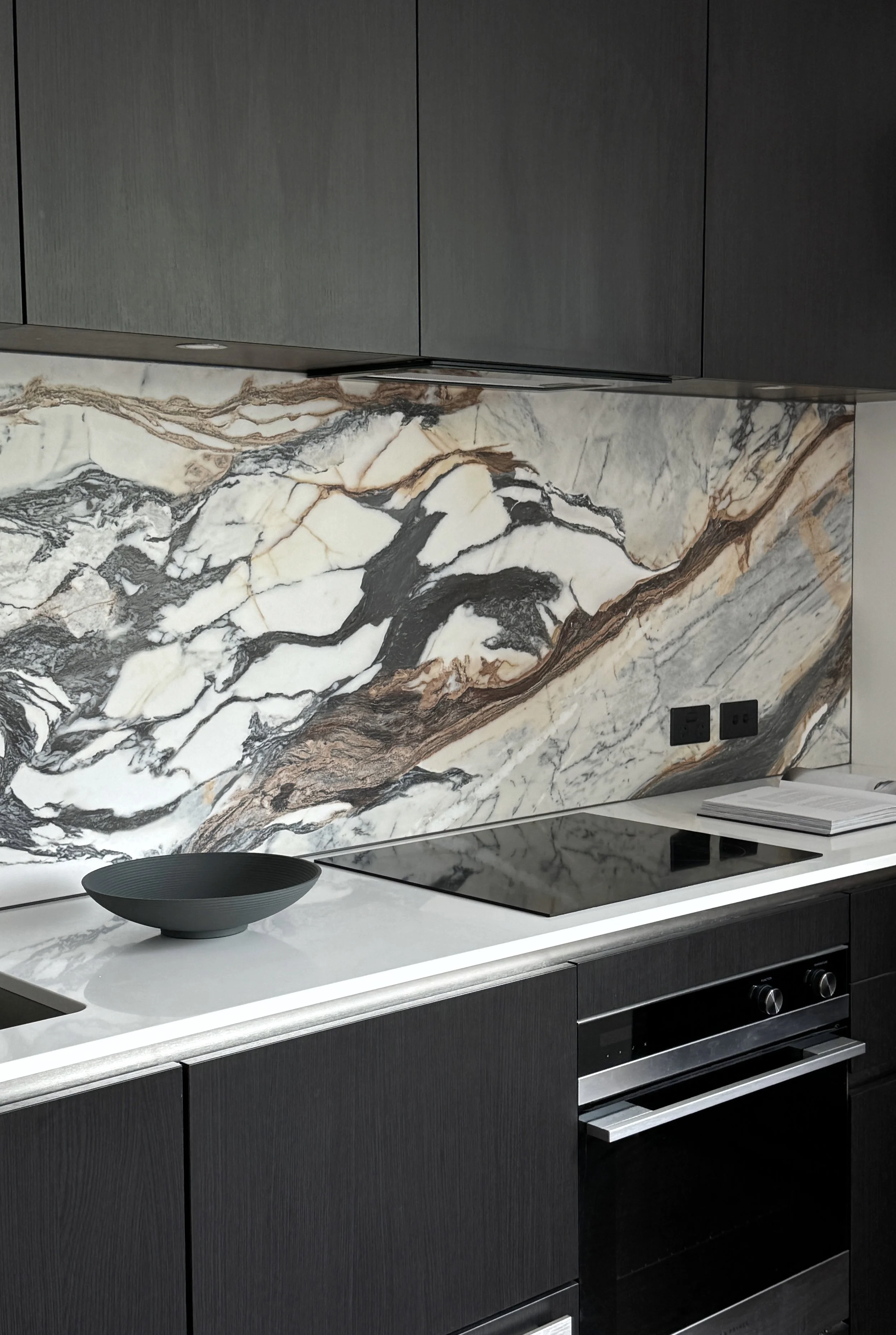
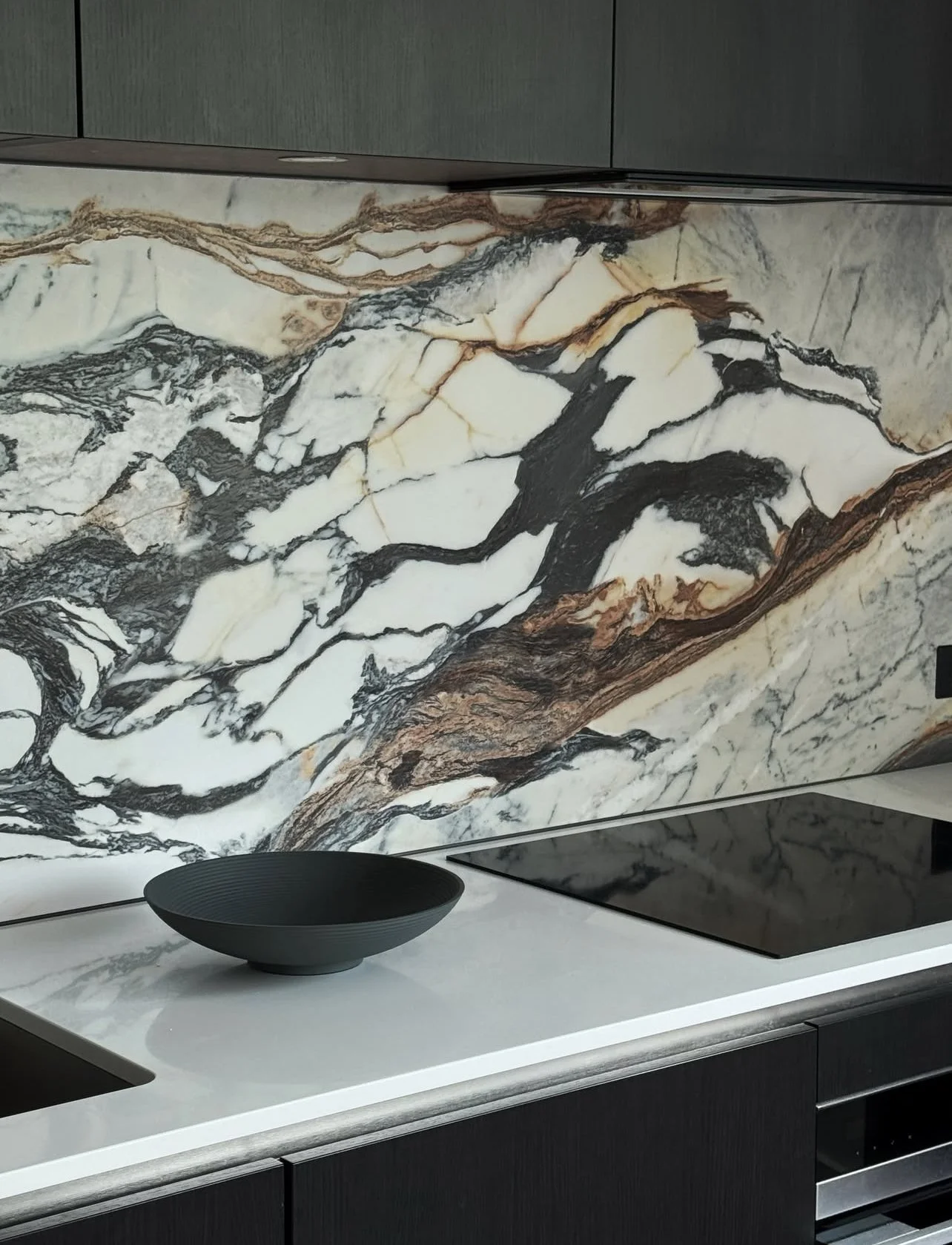
Splashbacks as a Seamless Continuation
Rather than breaking a space into sections, we often design splashbacks as a continuation of the surrounding surfaces.
Using the same format tile across:
Floors and splashbacks
Benches and walls
Vertical and horizontal planes
Creating visual flow and a sense of restraint. This approach works particularly well in open-plan homes, where the kitchen is viewed from multiple angles and needs to feel integrated rather than visually busy.
Full-height splashbacks, running from benchtop to upper cabinetry or ceiling, enhance this effect, offering a refined, architectural finish that feels intentional rather than decorative.
The Role of Scale in Splashback Design
Tile scale has a powerful impact on how a splashback is perceived.
Large-format tiles or slabs give splashbacks a monolithic, almost stone-like quality. The reduced grout allows the material to speak for itself, making spaces feel larger, lighter, and more cohesive.
Smaller-format tiles, when used sparingly, can introduce texture and rhythm, which is ideal for adding interest without overpowering a minimal palette.
The key is selecting a format that supports the overall mood of the space rather than competing with it.
Practicality That Enhances Design
A well-designed splashback should perform just as beautifully as it looks.
Format tiles offer:
Easy maintenance thanks to fewer grout lines
Durability in high-use zones like kitchens and bathrooms
Longevity, ensuring the space feels timeless rather than trend-driven
When the function is resolved quietly, the design can take centre stage.
Designing Splashbacks With Intention
Every splashback, when considered within the wider architectural context, cabinetry lines, bench thickness, joinery details and how light interacts with the surface throughout the day.
When scale, finish and placement align, splashbacks become more than a protective surface; they become a calm, grounding element that elevates the entire space.